Hey, I'm Slava 👋
[email protected] · Google Scholar · Twitter · LinkedIn · GitHub
I was born in Vodorezovo, a Siberian village with a population of twenty. As much as I loved Vodorezovo, I felt there were more meaningful things I could do elsewhere, so I took a few detours before eventually ending up in San Francisco, California.
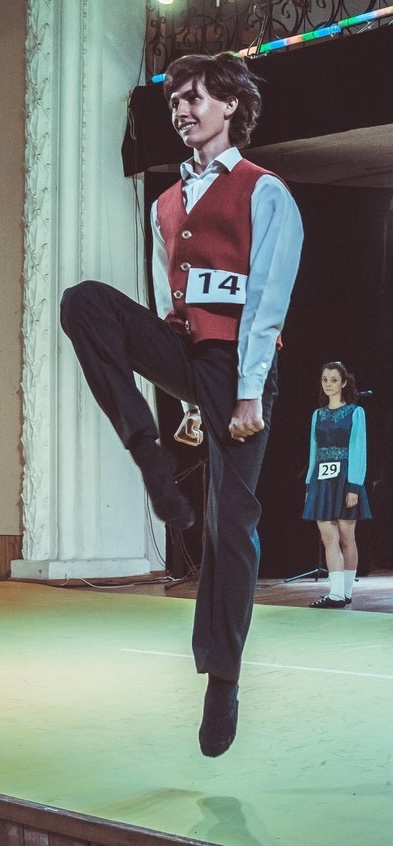
Professionally, most people probably know me as a mathematician or a startup founder. That's fair, although I do think it sometimes overshadows my earlier career as a competitive Irish dancer.
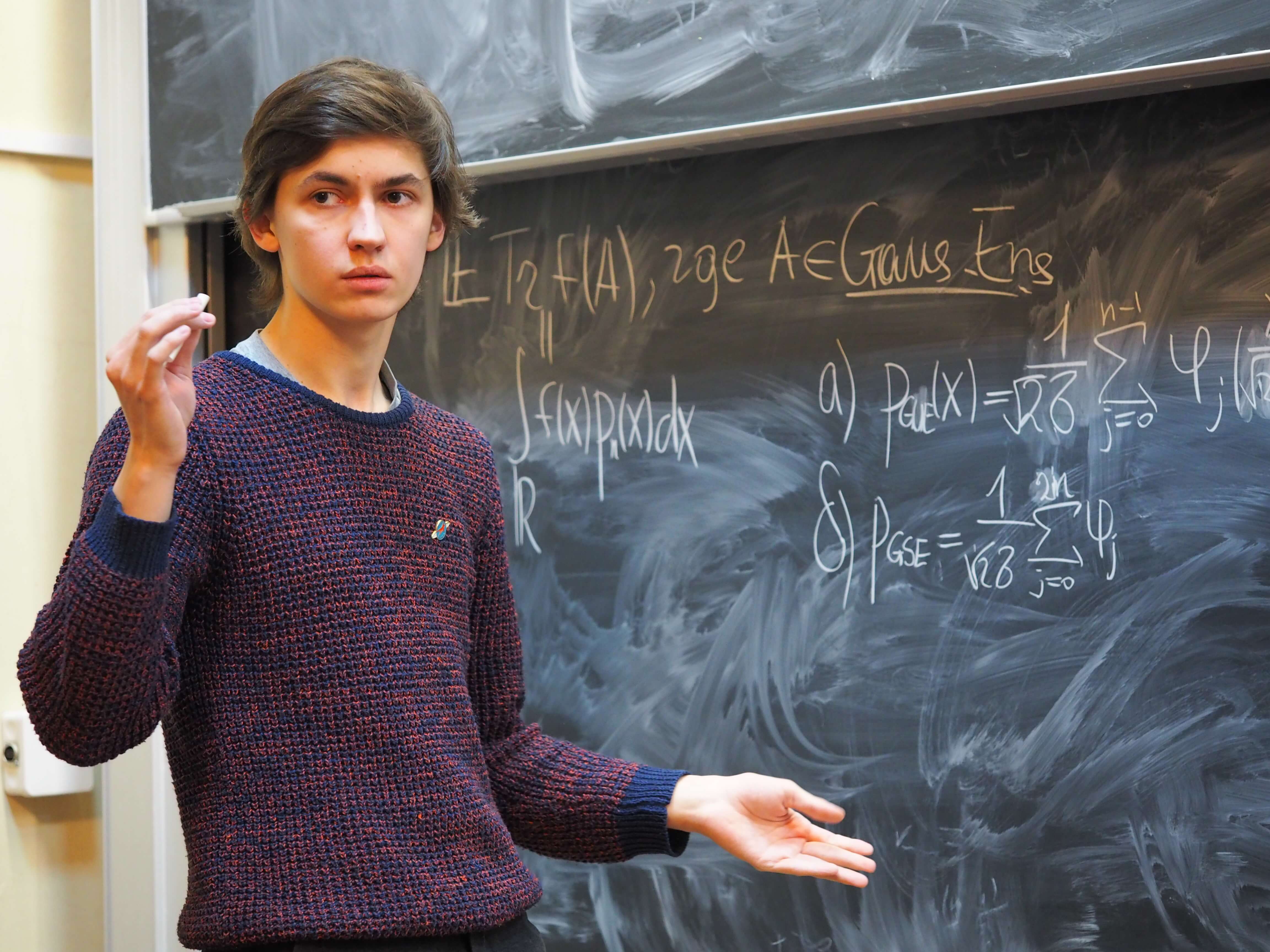
As a mathematician, I did my PhD at Stanford (graduated in 2023, advised by Dan Bump) and then worked as a postdoc at UNC Chapel Hill. My thesis was on integrable lattice models, a fascinating subject at the intersection of mathematical physics, algebraic combinatorics, and representation theory.
As a founder, I co-founded a startup in AI-driven drug discovery, where we developed computational methods that combined AI and physics-based modeling to predict the outcomes of expensive experiments.
As it happens, both of these identities are now slightly out of date.
These days, I spend most of my waking hours trying to understand and evaluate the capabilities of frontier AI models on tasks with long horizons and verifiable rewards, such as large-scale mathematical formalization and real-world optimization problems. Most recently, I led a small team of mathematicians and research engineers building agent workflows for mathematical research and formalization. You can find some of my work on my GitHub.
Some writing: